★★★★★
"Short-term things slip away so easily now. My wife and I end up arguing about what happened because neither of us is sure anymore."
G
Garry
Age 80
Age 80
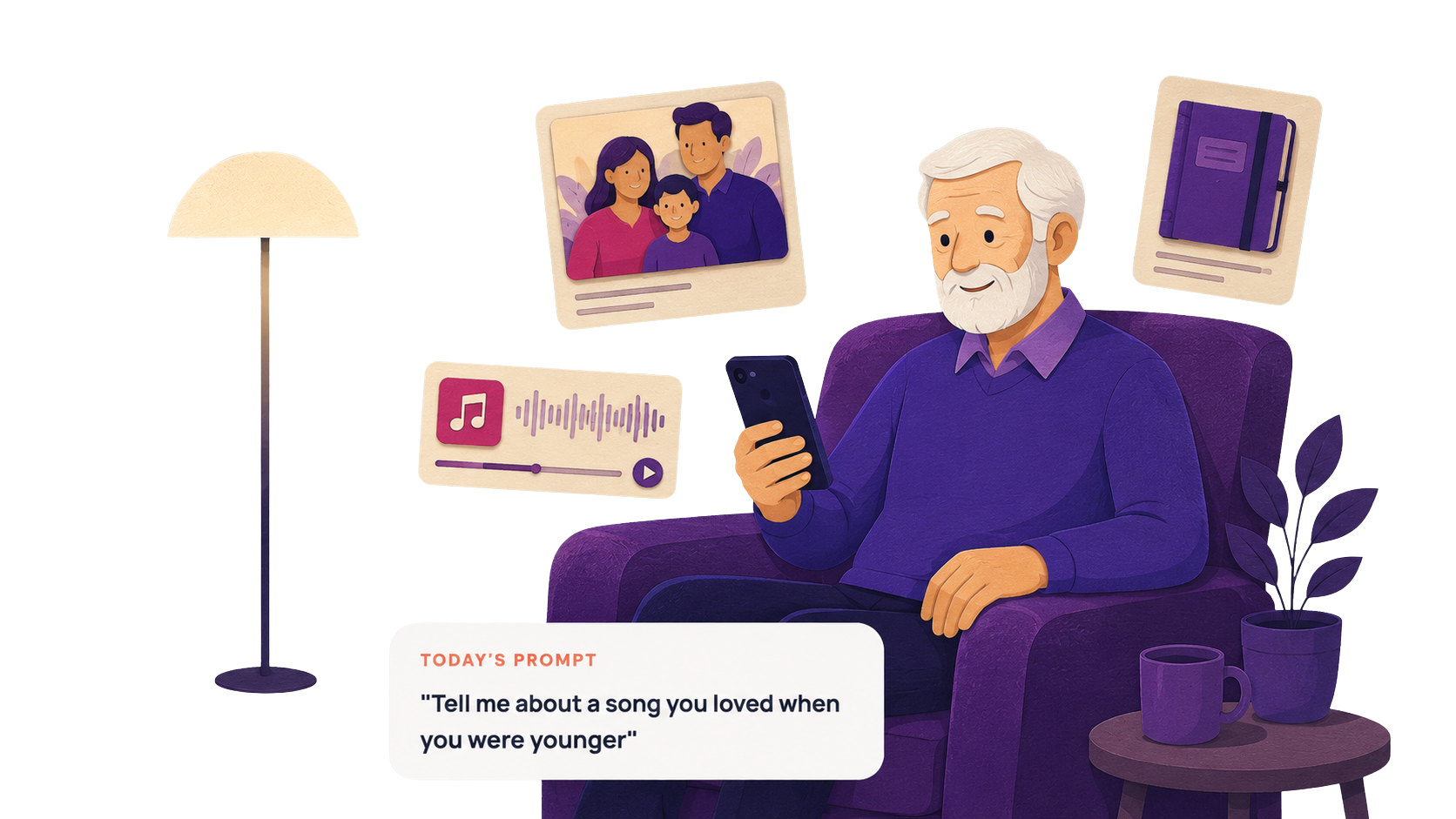
Built around life stories, gentle daily engagement, and clearer insight for families and clinicians.
"Short-term things slip away so easily now. My wife and I end up arguing about what happened because neither of us is sure anymore."
"I spent a whole week looking for a necklace I've had forever. It scared me how completely I forgot where I put it."
"If an app logs me out or asks for a password, I'm lost. I take photos to remember things, but finding them later is overwhelming."
"My husband avoids people because he's afraid of forgetting their names. I make little photo notes before events, but it's a lot to manage."
TwinMemory uses reminiscence therapy and personalized AI to help preserve life stories, strengthen identity, and slow cognitive decline. Your Memory Clone learns from your voice, photos, and experiences, creating meaningful daily conversations that reinforce memory and emotional health.
Short conversations built around the person's own memories — easy to follow and personally meaningful.
Families can contribute stories, organize meaningful details, and stay connected without feeling overwhelmed.
Clinicians and research partners can see home-use engagement and response trends in a format that supports follow-up care.
Each short interaction can help the person feel connected while creating useful context for the people supporting them.
Families add photos, voice notes, videos, and meaningful details through a guided intake.
Twin Memory turns familiar memories into reminiscence prompts, cognitive tasks, and gentle rehabilitation activities.
Engagement and response trends can be summarized for families, clinicians, and research partners.
Photos, voice, and memories are used only to build that individual's Twin Memory experience unless explicit consent says otherwise.
Families control what is shared, who sees it, and can request deletion of source materials and memory profiles.
Twin Memory supports daily engagement and longitudinal context, but does not replace diagnosis, treatment, or professional medical care.
Tell us whether you're a family member, clinician, or research partner. We'll follow up as we open pilot spots and collaborations.